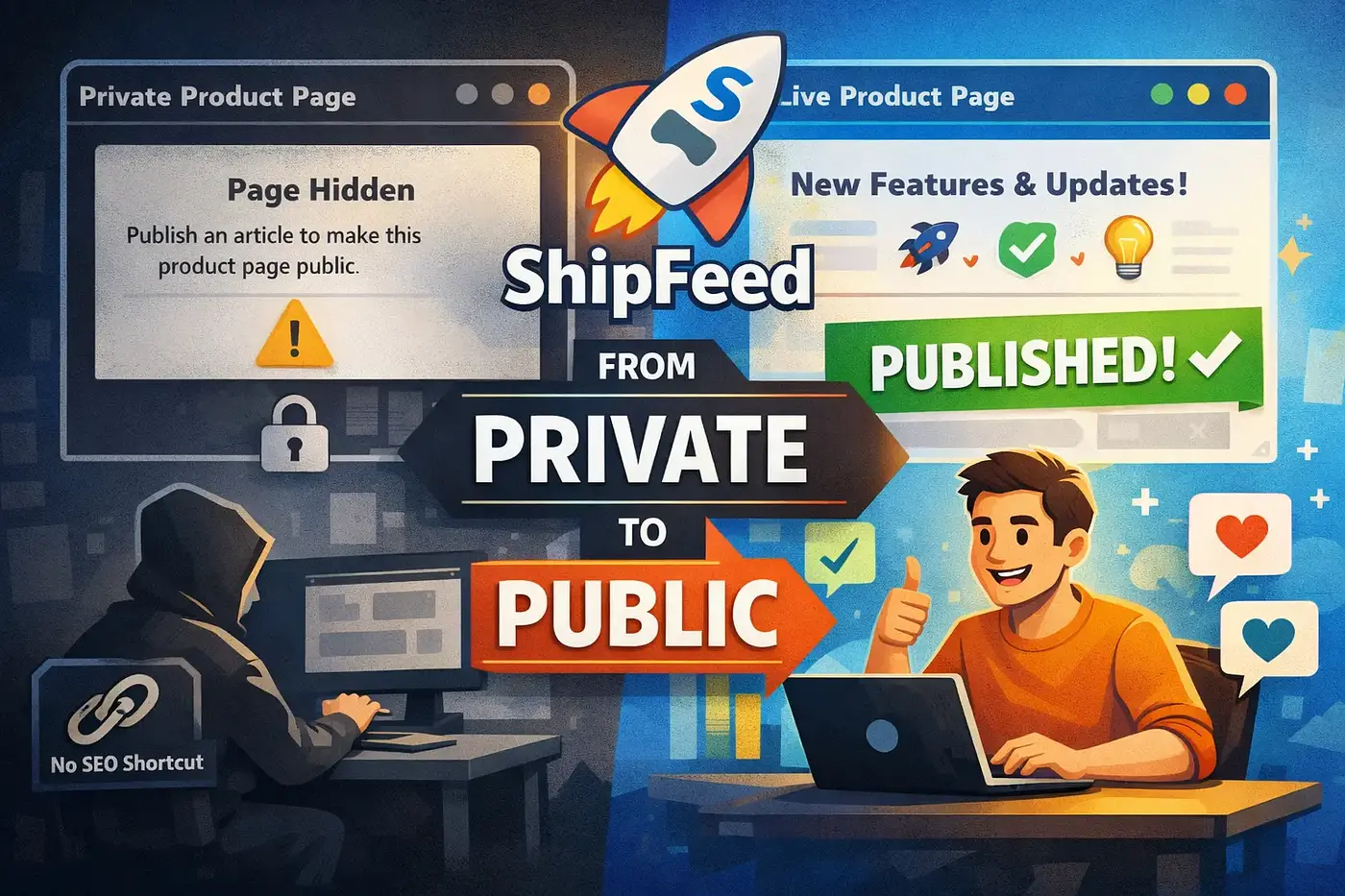
ShipFeed is designed for software products and teams that publish meaningful launches, feature updates, experiments, and milestones. A public product page should therefore represent a real digital product—not a placeholder created only to obtain a backlink.
That principle now shapes how product visibility works across ShipFeed.
Every product goes through review
New product submissions are reviewed before they can appear publicly. The review checks whether the submission represents a genuine SaaS product, application, AI tool, developer tool, or other user-facing digital product. Local services, offline businesses, affiliate lead-generation pages, and fictional test records do not qualify simply because they select a software-related category.
A real product logo is also required. Submissions without a logo remain pending until the owner provides one, because a complete visual identity improves trust and keeps the public directory useful for readers.
Approval unlocks public discovery
Once approved, a product can appear in the ShipFeed product directory, its relevant category hub, the XML sitemap, and contextual recommendations from related product pages. Pending, rejected, and otherwise hidden records are excluded from those public discovery surfaces.
Owners can then publish product updates that build a useful public history around the product. Launches, feature releases, roadmap changes, milestones, and lessons give readers a reason to return and give search engines more context than an empty profile could provide.
Quality matters more than link volume
The goal is not to manufacture thousands of thin pages. It is to create a trustworthy archive of what software teams are actually shipping. Review, logo requirements, useful descriptions, and ongoing updates make each public page more valuable to founders, readers, and search engines.
If you are building a real software product, you can submit it for review and start documenting what your team ships next.